PRODUCT · Variable Frequency Resonance Water Treatment Device
变频共振水处理器:先看参数与边界
Dewihan is a German-imported physical water treatment device that uses 0–60 kHz sweeping electromagnetic fields to treat industrial circulating cooling water. This page clearly covers the working principle, specifications, installation, and acceptance criteria in one place.
Product Positioning
Physically treat circulating water without altering its quality.
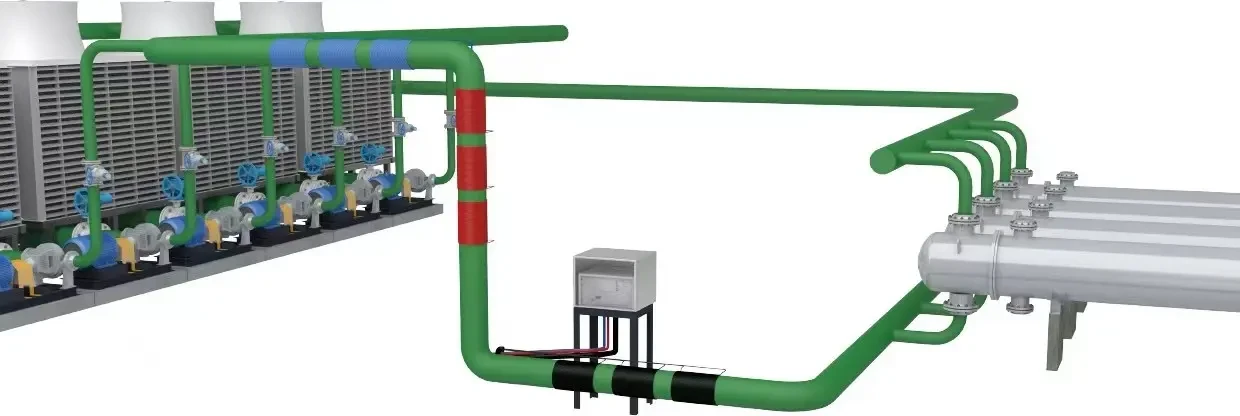
The device consists of a main control cabinet and a coil assembly wrapped around the exterior of the pipes. The coil generates an alternating magnetic field that acts on the circulating water, covering the entire system as the water flows through. Special emphasis is placed on high-scale-formation areas such as heat exchangers and condensers.
It can replace chemical agents or reduce their dosage while maintaining partial disinfection measures, depending on system openness and water quality conditions.
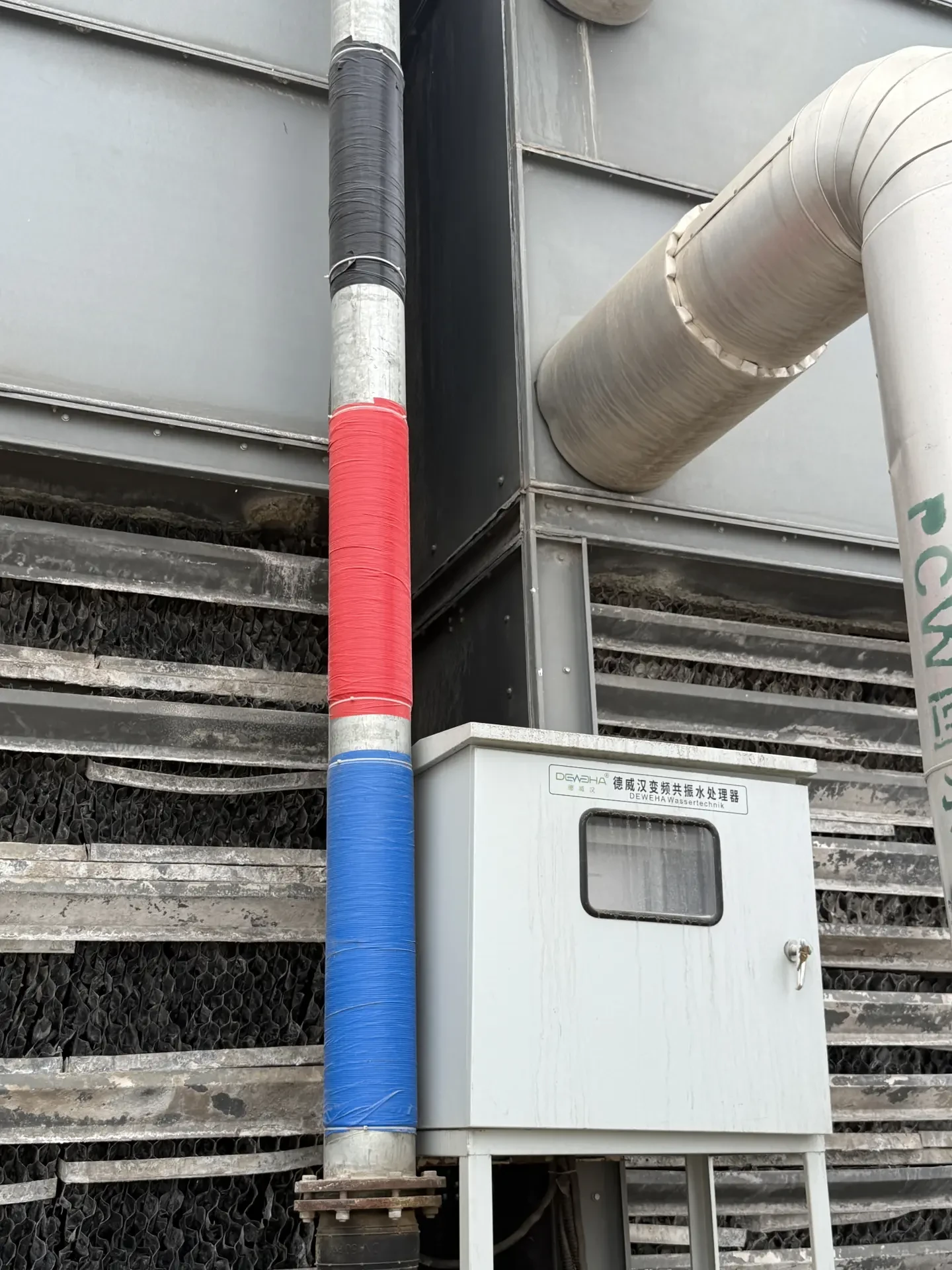 On-site installation of vertical pipes for cooling tower circulating water
Quick compatibility check
Match all three conditions before proceeding to selection.
Pipe Diameter Processing
DN60–DN1000
Main units can be installed on branch lines.
Cyclic Traffic
30–10000m³/h
Match devices to actual water volume
Circulating water temperature
Below 90°C
Wire wrapping works on both metal and plastic pipes.
Outside the specified scope, use is not necessarily impossible but requires a customized solution and acceptance criteria based on site conditions. No standard guarantees are provided.
Name and Terminology
Electronic Descaling Units, Electronic Scale Inhibitors, and Electromagnetic Descalers: While their names are similar, their operating principles differ significantly.
These terms are often used interchangeably on construction sites, but they refer to different technical approaches with distinct outcomes and applicability conditions.
In short: Electronic descaling and anti-scaling devices typically refer to equipment that outputs pulse or single-frequency signals via electronic circuits. Electromagnetic descalers and anti-scalers generally denote devices that treat circulating water using electromagnetic fields. "Descaling device" is an industry-wide term that may refer to either physical treatment equipment or cleaning apparatuses. The Dewehan variable-frequency resonance water processor belongs to the alternating electromagnetic field category of physical water treatment equipment, operating through 0–60kHz frequency sweeping and dual-coil capacitor-inductor interaction with circulating water.
Electronic Descaler / Electronic Scale Inhibitor
Commonly refers to equipment that outputs pulses or single-frequency signals via electronic circuits, which are then applied to the water flow through coils or electrodes. Actual performance depends on the frequency range, coil design, and compatibility with water quality.
Electromagnetic Descaler / Electromagnetic Scale Inhibitor
General term for equipment that treats circulating water using electromagnetic fields, including permanent magnets, static magnetic fields, and alternating electromagnetic fields. Descaling capabilities and effective ranges vary significantly across these implementations.
Descaler
Industry term: may refer to physical water treatment equipment, chemical cleaning systems, or high-pressure washing devices. Confirm specific operating principles and installation methods.
Dehui Han Variable Frequency Resonance Water Processor
0–60 kHz swept alternating electromagnetic field with dual capacitor-inductor coil structure. Coils wrap around the pipe exterior, enabling non-invasive installation without cutting or shutting down production.
How it works
Four actions occurring simultaneously
Scaling inhibition, descaling, disinfection, and corrosion prevention are not four separate steps; they are four outcomes resulting from the same physical field.
Scale Inhibition
ANTI-SCALE
Keep scale-forming ions suspended in water to prevent them from depositing on pipe walls.
Electromagnetic fields align calcium and magnesium ions in a specific orientation, maintaining them in suspension to reduce crystalline fouling on heat exchange surfaces.
Descaling
DESCALING
Breaks down large molecular clusters into smaller ones to penetrate and dissolve stubborn stains.
Resonance at the same frequency reduces water cluster size and increases activity, enabling penetration into existing scale layers to gradually dissolve and flush them out.
Sterilize
BIO-CONTROL
Disrupts bacterial metabolism, penetrates cell membranes, and inhibits the proliferation of bacteria and algae.
Electromagnetic fields inhibit microbial metabolism and adhesion in water, reducing sludge and biofouling.
Anti-corrosion
CORROSION
Generate a magnetic oxide layer on the inner pipe wall to isolate the pipe from the water.
The tube wall forms a dense Fe3O4 film that acts as a barrier to slow electrochemical corrosion.
Technical Features
Difference from other physical methods
Wide Frequency
Sweep frequency covers various water qualities, creating resonance with circulating water.
0–6 kHz
Strong magnetic field
Larger pipe diameter and more coils result in higher power and greater water processing capacity.
Enhanced with pipe diameter
Far away
The magnetic field acts for more than 2 hours, with an effective range of up to 10 km.
2 hours or more
Anti-interference
Filter out burrs and clutter; block invalid and counterproductive frequencies.
Remove clutter
Stable performance
Power on and run with no maintenance required. Magnetic field remains stable, safe, and long-lasting.
Maintenance-free
Comprehensive Advantages
8 Verifiable Benefits
01Substitute chemical agents or water softeners to reduce procurement and dosing management.
02Powered operation using physical methods; no chemical agents introduced.
03Preserves water quality with no secondary pollution; discharge is not limited by reagent specifications.
04Easy to install; winding operations do not require stopping production.
05Protect heat exchangers and pipelines, reduce under-deposit corrosion, and extend service life.
06Low power consumption, no consumables required. Simply plug in to run.
07Long equipment lifespan, low depreciation costs, and controllable long-term operating expenses.
08Increases the cycle concentration ratio, reducing blowdown and makeup water.
Plan Comparison
Place alternatives in the same table.
Compare based on long-term operational costs, maintenance requirements, and applicable boundaries—not single parameters.
Mode of Action
Medication:Add scale inhibitors and biocides
Softened WaterResin exchange reduces hardness
Other Physical:Permanent magnet, electrostatic, or electrolytic
Dewei HanVariable-frequency resonant electromagnetic field
Can it replace medication?
Medication:It is the remedy itself.
Softened WaterSterilization and corrosion inhibition still required
Other Physical:Most require medication
Dewei HanChemical alternative for most operating conditions
Operating Cost
Medication:Continuous purchasing leads to high cumulative costs.
Softened WaterSalt Recharge, Resin Replacement, and Wastewater
Other Physical:Magnet demagnetization or electrode wear
Dewei HanPower on and run; no consumables required
Maintenance volume
Medication:Testing, dosing, and dispensing
Softened WaterRegeneration and resin maintenance
Other Physical:Replace components regularly
Dewei HanMaintenance-free; no daily management required
Water Quality Impact
Medication:Water quality changed, discharge restricted
Softened WaterReduced hardness, unchanged chloride levels, increased corrosion.
Other Physical:Depends on the technical approach.
Dewei HanDoes not alter water quality
Scope
Medication:Distributed unevenly with the water flow
Softened WaterHydration only
Other Physical:More localized to the device
Dewei Hanentire circulatory system
Applicable Conditions
Define clear boundaries to ensure comparable results.
Applicable Pipe Diameter
DN60–DN1000
Install at branch when main pipe is large.
Cyclic Traffic
30–10000m³/h
Match coil group count to actual operating conditions
Water temperature conditions
<90℃
Wire wrapping works on both metal and plastic pipes.
Water Quality Indicators
≤2000mg/L
Sum of calcium hardness and alkalinity; or conductivity ≤ 5000 μs/cm
For special operating conditions (poor water quality, high water temperature, rapid scaling), inspect monthly or weekly and establish separate acceptance criteria.
Selection and Installation
Where you install matters more than whether you do.
Common supply pipe after the circulation pump
Optimal location: stable water flow, full system coverage, and centralized processing.
First branch before the heat exchanger
Prioritize protection of heat transfer surfaces near critical equipment such as heat exchangers and condensers.
Turbulence Location
Water turbulence near bends, pumps, valves, and filtration units enhances magnetic field effectiveness.
Supported Systems
- Bends or straight sections are acceptable at the wrapping point. The length of the wrapped section should be at least 20 times the pipe diameter.
- The return pipe passes through the sprinkler system and pool, which can interfere with the magnetic field; therefore, it is not suitable for installation.
- Buried pipes require trench excavation and waterproofing; direct backfilling is not permitted.
- Remove insulation at the wrapping area. Clean off thick anti-corrosion paint or rust thoroughly.
- When multiple small branches are connected in parallel, a single high-power device can be used to drive them.
- For outdoor installation, a rainproof enclosure is required. For hazardous locations, configure an explosion-proof enclosure with the appropriate rating.
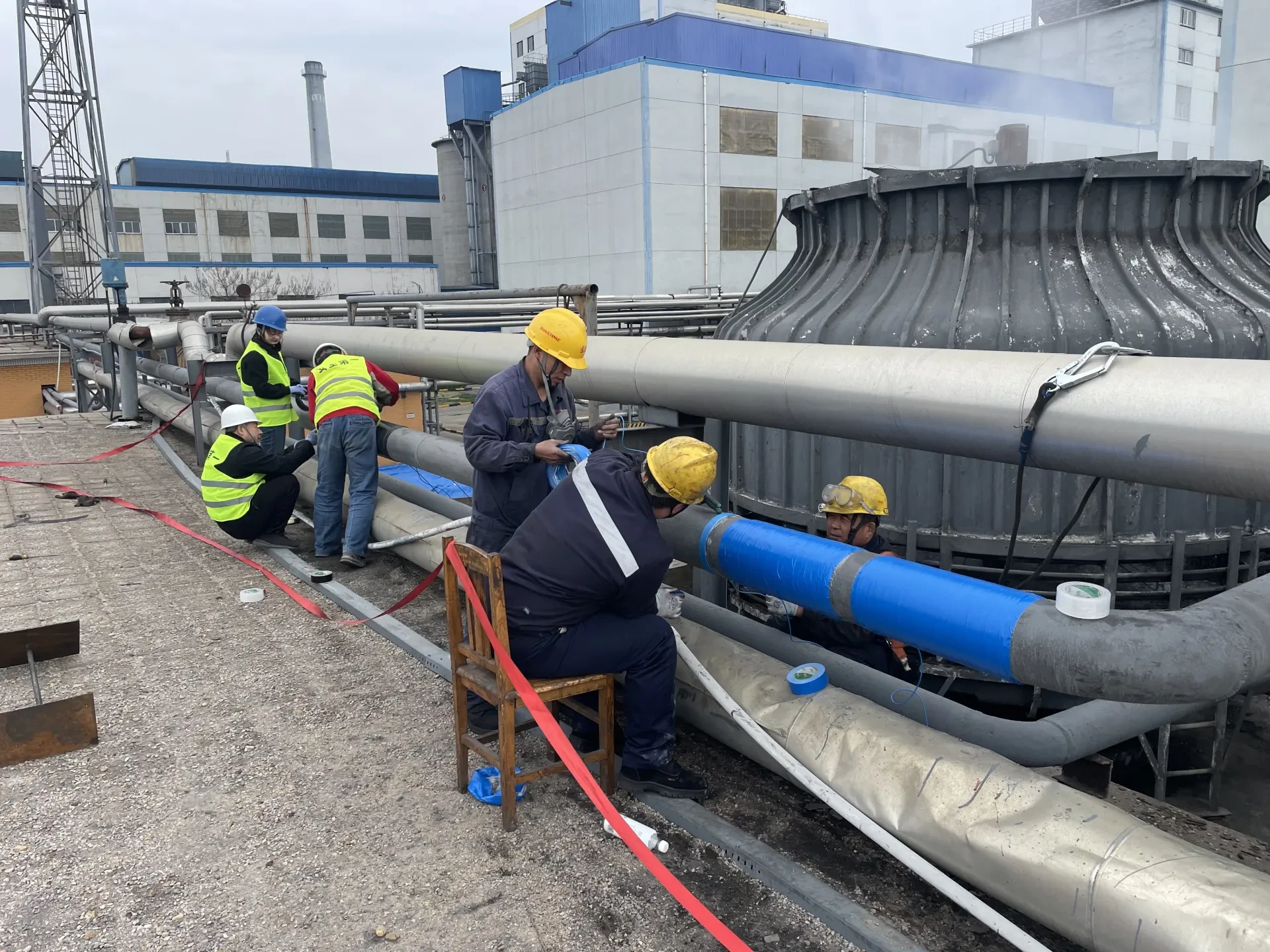
Top-of-cooling-tower pipeline installation, coordinated with water shutdown windows.The coil assembly is installed on the main circulation water supply pipe.
Acceptance and Results
Define standards first, then discuss results.
Agreed Standards
Before installation, confirm the acceptance cycle, compare positions and determination methods, and document them in the plan.
Take Photo & Compare Data
Take photos of the heat exchanger or return water pipe monthly for records, and log the terminal temperature difference, pressure, and flow rate.
Compliance Determination
The scale at the original fouled location becomes softer, thinner, or reduced; no new scale forms at unfouled locations. This meets the standard.
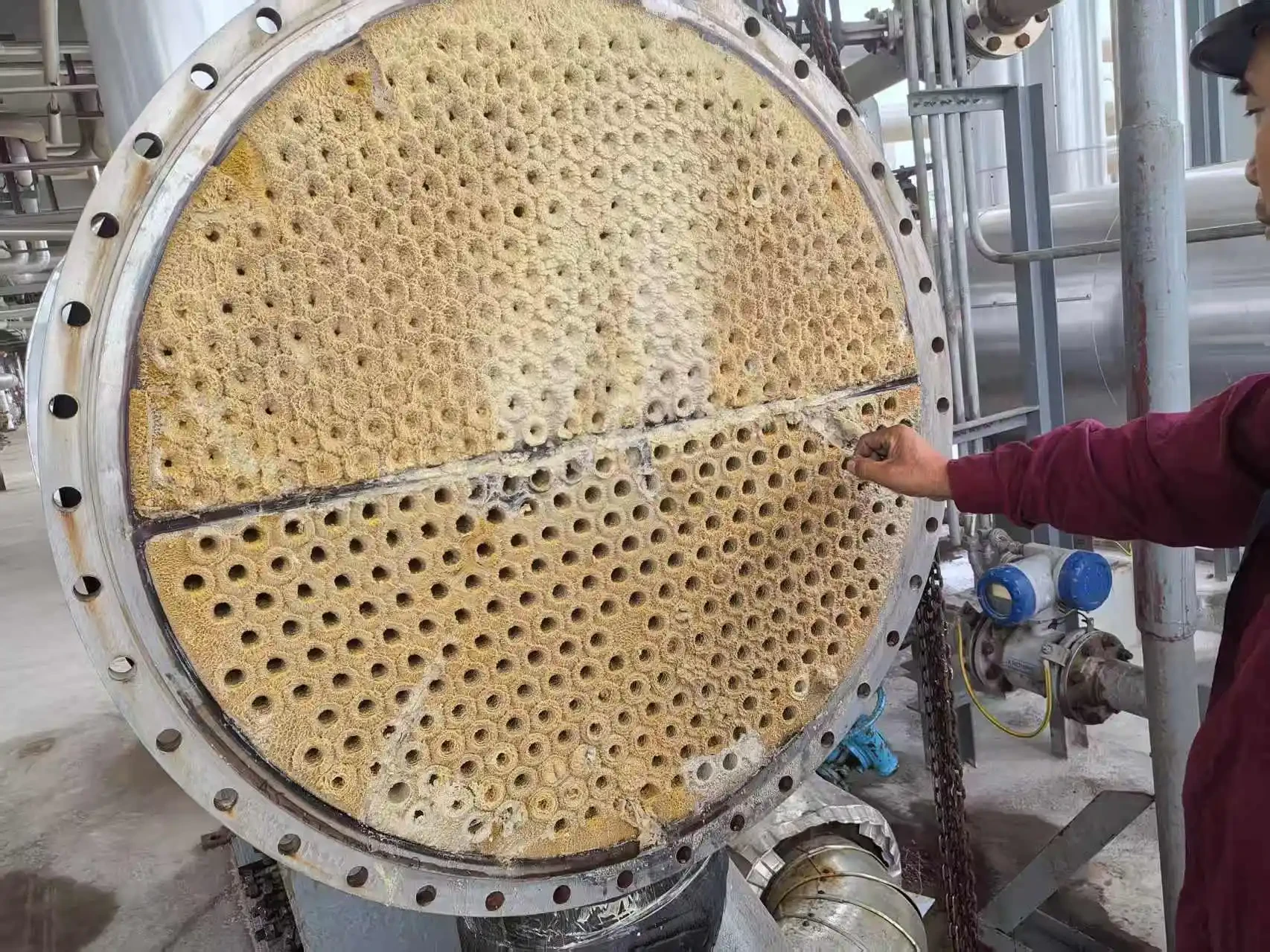
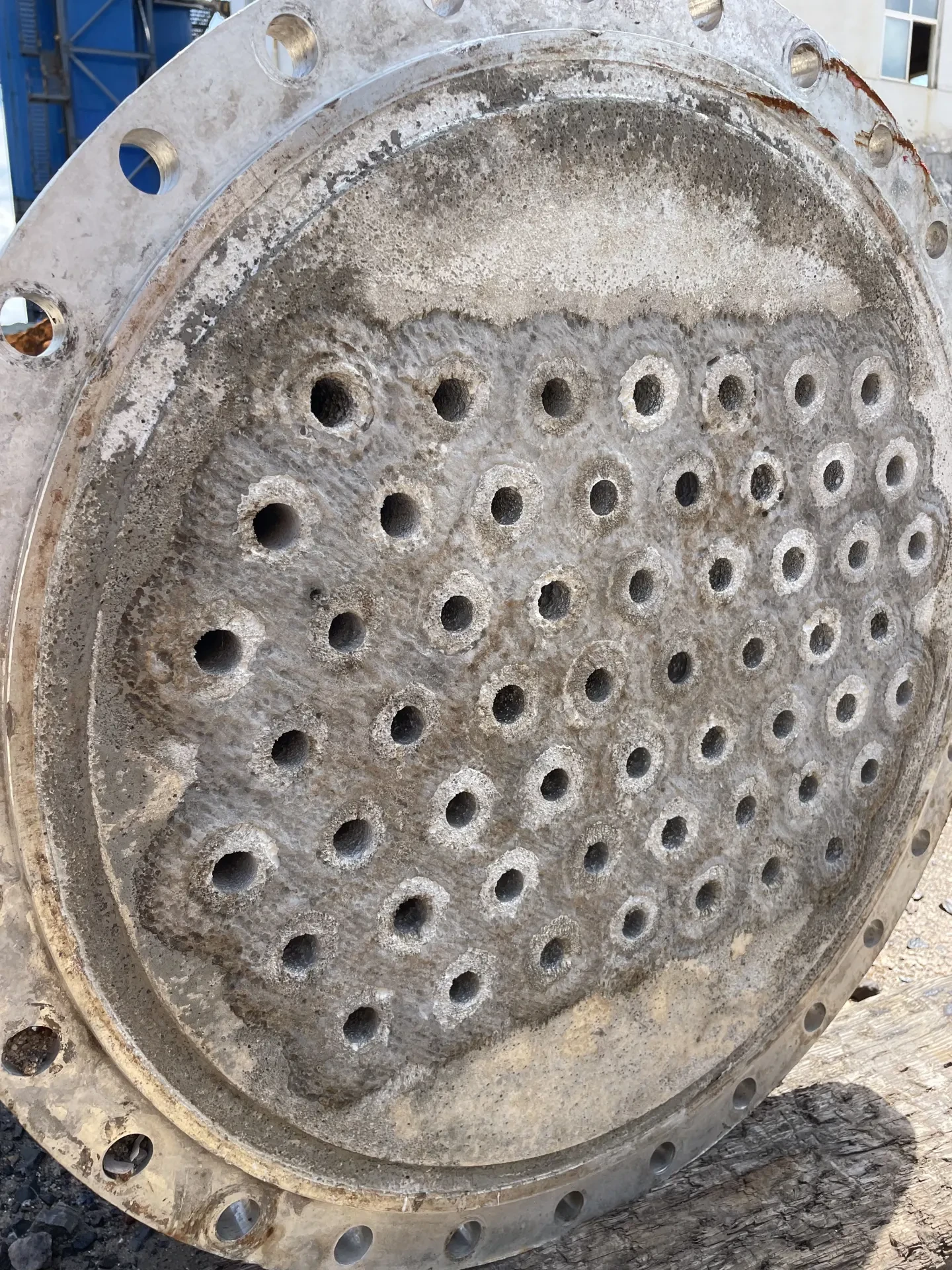
Water quality metrics are not used for acceptance: the equipment does not alter water quality. Hardness and conductivity will not decrease. Evaluate effectiveness based on the actual condition of the heat exchange surfaces and pipe walls.
Limitations and Boundaries
What scenarios does it fail to address?
- Installation requires a certain length of coiled conduit section. Some operating conditions lack suitable locations, such as power plants where the main water supply line is very short and buried underground.
- This product does not filter water or reduce hardness; it is designed to control scaling.
- During summer, algae and bacteria may still grow in small amounts near the pool edge or in areas where the packing material is not submerged, as magnetic fields do not reach these zones.
Common Concerns
Four Questions Most Frequently Asked by Engineers
How do we validate the results?
The acceptance period is typically 1–3 months, using photo comparison and operational data comparison. Acceptance criteria should be agreed upon prior to installation.
Can the old system remove thick buildup?
Prevents new scale buildup immediately. After approximately 10 days, existing scale begins to soften, flake off, and thin out. It is typically removed within about 3 months. The dislodged scale is expelled through the filter or increased drainage.
Do you need to stop water and production for installation?
The coil is wrapped around the exterior of the pipe, eliminating the need to cut the pipe or shut down operations. Simply schedule the work during planned maintenance windows.
How is value for money calculated?
Initial equipment investment is roughly equivalent to several years of chemical costs, while reducing expenses for cleaning, labor, water replenishment, and maintenance. Actual payback period varies based on your specific operational data.
Selection Requirements
Provide operating conditions first for applicability assessment.
Enter pipe diameter, flow rate, water temperature, and other parameters. The technical team will review them and provide a selection recommendation along with acceptance criteria. Northbound requirements incur no additional charges.
Helpline:13305317997
Contact:Manager Zheng 13505313113
Email:admin@youweb.com