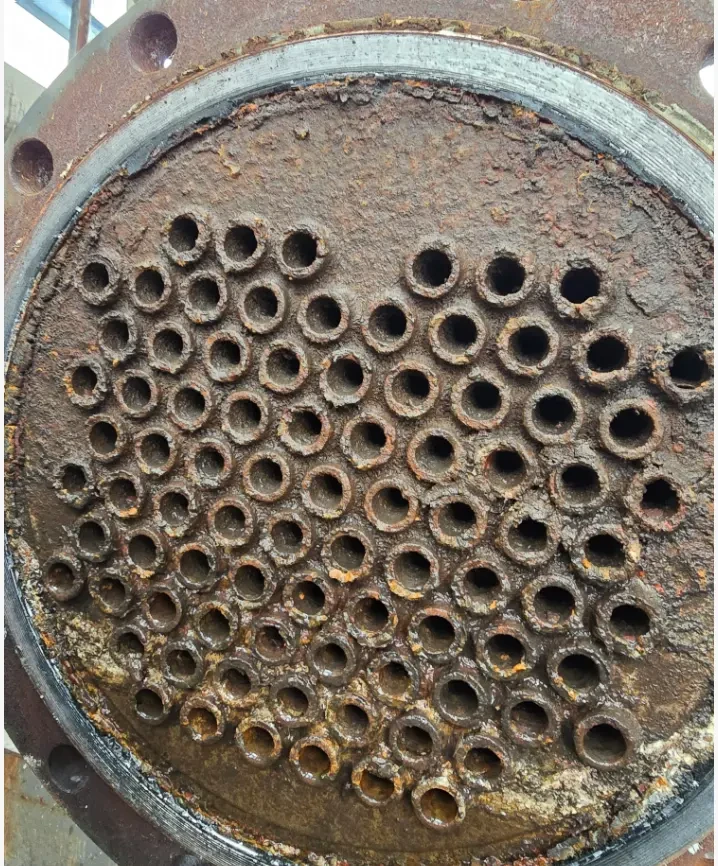
Many companies treat scaling as merely a cleaning issue, budgeting only for acid washing and labor. In reality, the impact of scaling spans four key areas: reduced heat transfer efficiency increases energy consumption; inadequate cooling leads to production losses; cleaning and downtime raise maintenance costs; and under-deposit corrosion drives equipment and part replacement expenses.
Using a heat exchanger as an example, increased fouling thickness significantly raises thermal resistance. This leads to a larger temperature difference on the cooling medium side, forcing the system to increase flow rates or reduce load to maintain production. These losses often don't appear on maintenance records but occur continuously.
When evaluating water treatment solutions, compare not just the unit price of chemicals but also the total cost of energy consumption, makeup water, wastewater discharge, cleaning, downtime, and equipment lifespan. The payback period for equipment investment must be calculated using your own operational data, as it varies significantly across different operating conditions.